

Cloud computing is a way to use computers and data over the internet. Instead of keeping files and programs on your computer, you can use them online. This makes work easier and faster for many people and companies.
What Is Cloud Computing?
Imagine you want to watch a movie. Instead of saving it on your phone, you watch it online. Cloud computing works like this. It lets you use software and store data on the internet. You do not need big computers at home. Everything is saved on remote servers.
Why Is Cloud Computing Important?
Cloud computing helps people and businesses save money. You do not have to buy expensive equipment. You can use services when you need them and pay only for what you use.
It also helps people work from anywhere. If you have internet, you can access your files. This is useful, especially when many people work from home.
Key Trends Shaping the Future of Cloud Computing
The future of cloud computing is bright. Many new ideas and technologies are changing how it works. Here are the main trends that will shape the future:
1. Ai And Machine Learning Integration
Artificial Intelligence (AI) means teaching computers to learn and think like humans. Machine Learning (ML) is a part of AI where computers learn from data.
Cloud services are adding AI tools. These tools help businesses analyze data quickly. They can predict trends and make smart decisions.
For example, a company can use AI to know what products will sell best next month. This saves time and money.
2. Hybrid And Multi-cloud Solutions
Not all data goes to one cloud. Some companies use more than one cloud provider. This is called multi-cloud.
Hybrid cloud means combining private clouds (inside the company) with public clouds (on the internet). It gives more control and flexibility.
Using many clouds helps companies avoid problems if one cloud has issues. It also helps keep data safe.
3. Edge Computing
Edge computing means processing data near where it is created, not far away in big data centers. This makes things faster.
For example, smart cars need to react quickly. They use edge computing to process information fast. This helps keep people safe.
4. Industry-specific Clouds
Some clouds are made for special industries like health care or banking. These clouds have tools and security made just for those fields.
This helps companies follow rules and keep data private. It also makes their work easier.
5. Focus On Sustainability
Cloud providers are working to use less energy and help the planet. They build data centers that use renewable energy like wind and solar.
Some data centers reuse heat to warm buildings. This helps reduce waste and pollution.
6. Autonomous Cloud Management
Clouds will manage themselves more in the future. They will fix problems, adjust settings, and protect data without human help.
This saves time and makes cloud services more reliable.
How Cloud Computing Will Affect Businesses
Cloud computing will help businesses become more efficient. They can use smart tools to understand customers better.
It will also help companies create new products and services faster. They do not need to wait for new hardware or software.
Businesses will save money on IT costs. They can focus on their work, not technology problems.
Challenges Cloud Computing Will Face
Even with many benefits, cloud computing has challenges. One big issue is security.
Companies worry about keeping data safe from hackers. Cloud providers must keep improving security tools.
Another problem is cost. Sometimes, using many cloud services can be expensive. Businesses need to manage their cloud use carefully.
Also, some companies want more control over their data. This is why hybrid clouds are popular.
Credit: www.mindinventory.com
How Cloud Computing Helps People Daily
Cloud computing is not just for businesses. Many people use it every day.
When you use apps like email, video calls, or music streaming, you use cloud computing. Your photos and documents can be saved safely online.
This means you can access them from any device. You do not have to carry a USB or hard drive.
Cloud Computing and New Technologies
The cloud supports many new technologies. For example, the Internet of Things (IoT) connects many devices to the internet.
These devices create a lot of data. Cloud computing helps store and analyze this data.
Another new area is quantum computing. It promises to solve complex problems faster. Cloud providers are starting to offer quantum computing services.
What Will Replace Cloud Computing?
Some people ask if cloud computing will be replaced. For now, cloud computing will keep growing and changing.
New technologies like AI and edge computing will join it. Together, they will make cloud services smarter and faster.
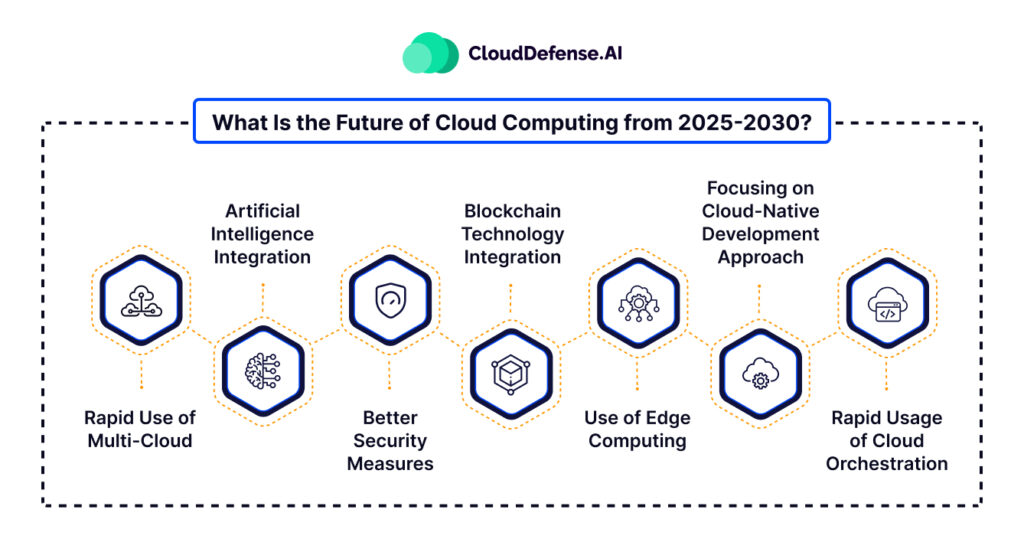
Summary Table: Future Cloud Computing Trends
| Trend | Description | Benefit |
|---|---|---|
| AI & Machine Learning | Cloud platforms use AI tools for smart decisions. | Faster data analysis and better predictions. |
| Hybrid & Multi-Cloud | Use multiple cloud services for flexibility. | More control and safety of data. |
| Edge Computing | Process data near its source. | Faster response times. |
| Industry Clouds | Clouds made for specific industries. | Better tools and security for special needs. |
| Sustainability | Energy-efficient and green data centers. | Less pollution and lower costs. |
| Autonomous Management | Clouds that manage themselves. | More reliable and less human work. |
Credit: www.clouddefense.ai
Frequently Asked Questions
What Will Replace Cloud Computing In The Future?
Future cloud computing will evolve with AI integration, hybrid and multi-cloud models, edge computing, and quantum advancements. These innovations boost efficiency, security, and flexibility. Specialized industry clouds and autonomous management will drive business innovation, making cloud platforms smarter and more sustainable for complex workloads and seamless user experiences.
What Is The Future Of Cloud Computing In 2030?
The future of cloud computing in 2030 includes AI-native platforms, hybrid multi-cloud expansion, edge computing growth, and enhanced security. Sustainability and autonomous management will drive efficiency. Specialized industry clouds and serverless models will boost innovation and handle complex workloads, making cloud computing essential for businesses worldwide.
Why Are We Leaving The Cloud?
Companies leave the cloud due to rising costs, security risks, and limited control. They prefer hybrid or on-prem solutions for flexibility and better management.
What Is The Next Big Thing In Cloud Computing?
The next big thing in cloud computing is AI-native platforms that enable automation, predictive analytics, and enhanced efficiency. Hybrid and edge computing also drive innovation, boosting flexibility and performance while improving security and sustainability. These trends transform cloud into an intelligent, autonomous business engine.
Conclusion
Cloud computing will keep changing our world. It will help businesses and people work better.
New tools like AI and edge computing will make clouds smarter. Using multiple clouds will give more safety and choice.
The focus on green energy will help protect the planet. Cloud computing is not just a tool now; it is a key part of the future.