

CRISPR is a tool scientists use to change DNA. DNA is the code inside every living thing. It tells cells what to do. With CRISPR, scientists can edit this code.
What Is CRISPR?
CRISPR stands for “Clustered Regularly Interspaced Short Palindromic Repeats.” It is a part of bacteria’s natural defense system. Bacteria use CRISPR to fight viruses. Scientists learned how to use this system to edit genes in other living things.
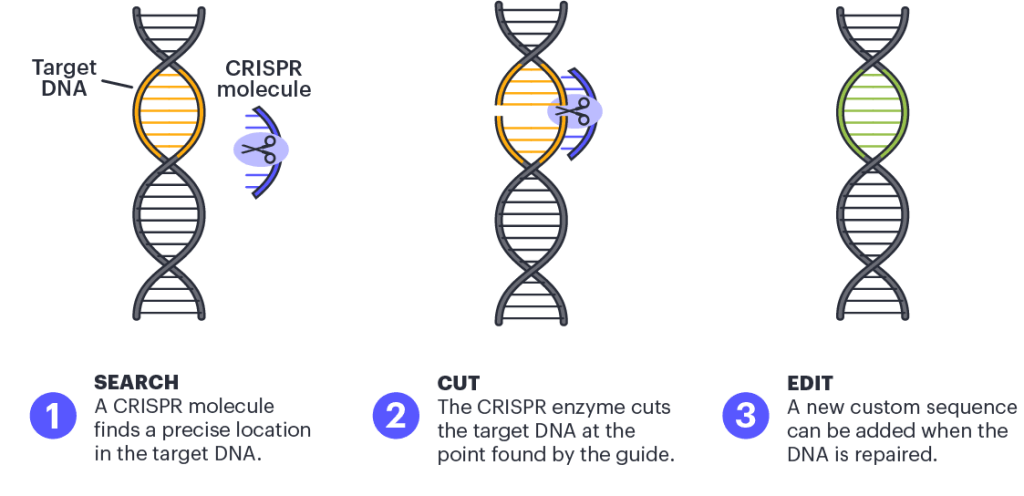
Think of CRISPR as tiny scissors. These scissors can cut DNA at a specific spot. After cutting, the DNA can be changed. This process is called gene editing.
Credit: innovativegenomics.org
Why Do Scientists Use CRISPR?
Genes can have mistakes. These mistakes cause diseases. CRISPR helps fix these mistakes. It can also turn off bad genes or add new ones. This can help with research and medicine.
Credit: knowablemagazine.org
How Does CRISPR Gene Editing Work? Step by Step
CRISPR gene editing has clear steps. Each step is important. Here is a simple breakdown:
1. Design And Preparation
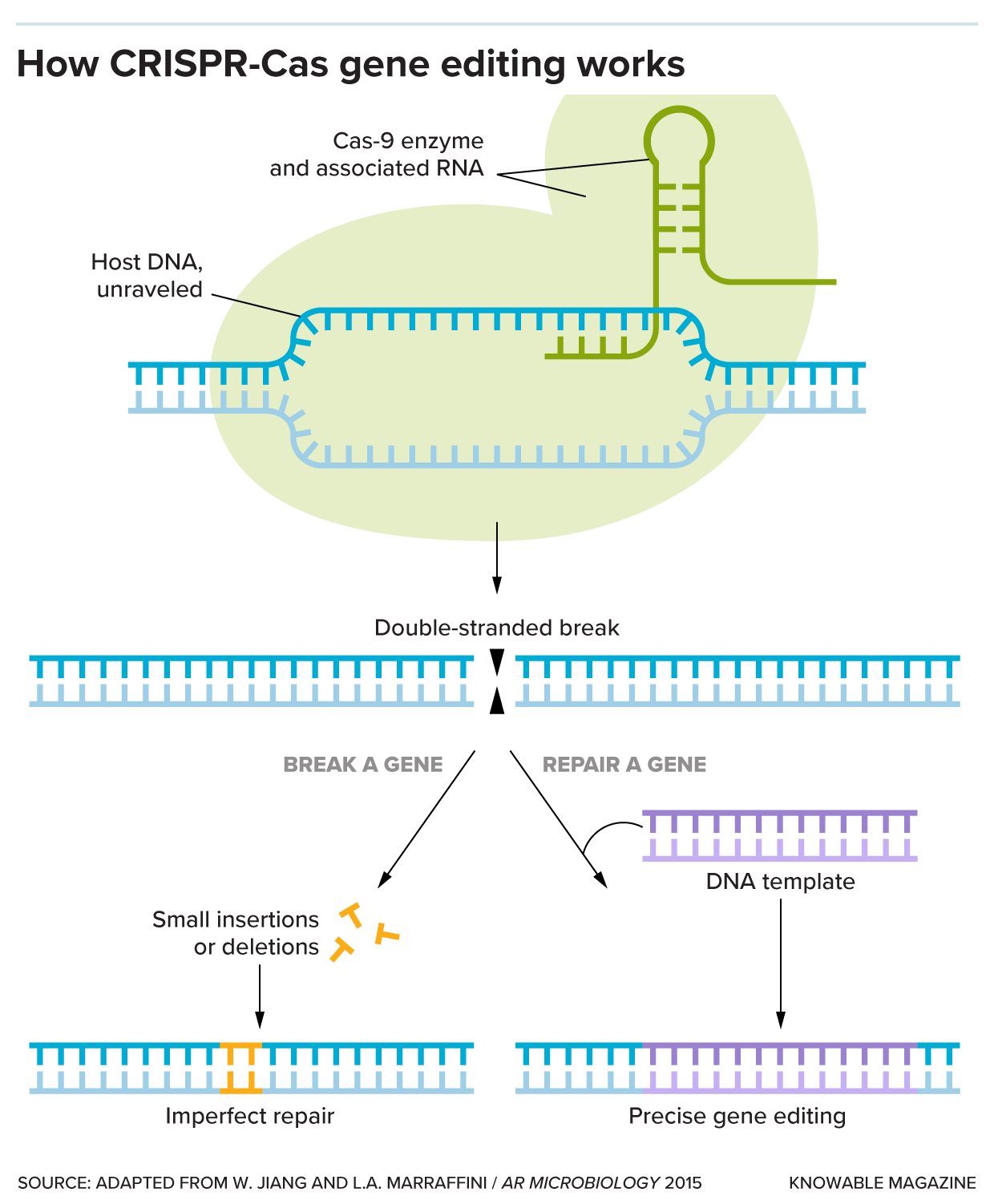
Scientists first find the gene they want to change. They design a small piece of RNA called guide RNA (gRNA). This guide RNA matches the DNA spot to edit. It tells the scissors where to cut.
2. Delivery
The CRISPR system includes the guide RNA and a protein called Cas9. Cas9 is the scissors. Scientists put both into a complex called RNP. Then, they deliver this complex into target cells. This can be done by many methods, like electroporation. Electroporation uses electric pulses to open cell walls briefly.
3. Targeting And Binding
The guide RNA finds the matching DNA sequence inside the cell. It binds to this spot. Cas9 follows the guide RNA to the right place. This ensures the cut happens at the correct site.
4. Cleavage (cutting)
Cas9 cuts both DNA strands at the targeted location. This cut is called a double-strand break. But Cas9 needs a special DNA sequence called PAM to work. PAM stands for “Protospacer Adjacent Motif.” It helps Cas9 find the right spot quickly.
5. Cellular Repair And Editing
After cutting, the cell tries to fix the break. The cell has natural repair systems. There are two main ways the cell repairs DNA:
| Repair Method | How It Works | Effect on Gene |
|---|---|---|
| Non-Homologous End Joining (NHEJ) | The cell quickly joins the DNA ends back together. | This often causes small mistakes called insertions or deletions (indels). These can turn off the gene. |
| Homology-Directed Repair (HDR) | Scientists provide a new DNA template. | The cell uses this template to fix the break precisely. This allows adding or changing specific DNA parts. |
6. Analysis
After editing, researchers check if the change worked. They use methods like DNA sequencing. This confirms the gene was edited correctly.
Examples of CRISPR Use
Scientists use CRISPR to study and treat diseases. It shows promise for many health problems.
Diseases Treated Or In Trials
- Sickle Cell Disease and Beta-Thalassemia: CRISPR helps make fetal hemoglobin. This replaces the faulty adult hemoglobin.
- Transthyretin Amyloidosis: CRISPR can reduce harmful protein buildup.
- Huntington’s Disease: Researchers are working to edit the faulty gene.
- Duchenne Muscular Dystrophy: CRISPR may help fix muscle gene defects.
- Cystic Fibrosis: Scientists aim to correct the gene causing this lung disease.
- HIV: CRISPR is tested to disable the virus inside cells.
- Certain Cancers: It can help improve immune cells to fight tumors.
- Hereditary Blindness: CRISPR might fix genes causing vision loss.
Why Is CRISPR Important?
CRISPR is easier and faster than older methods. It can edit DNA very precisely. This helps scientists learn more about genes. It also opens new ways to treat diseases.
Limitations and Challenges
CRISPR is not perfect. Sometimes, it cuts the wrong DNA spot. This is called off-target effects. Scientists work hard to reduce these mistakes.
Also, not all cells accept CRISPR easily. Delivering CRISPR tools inside the body can be hard. More research is needed to make CRISPR safe for humans.
Summary
CRISPR gene editing is a powerful tool. It uses a guide RNA and Cas9 scissors. Together, they cut DNA at chosen spots. The cell then repairs the DNA. This repair can disable or fix genes.
Many diseases might be treated with CRISPR. Scientists continue to study and improve this method. It is a key tool in genetic research today.
Understanding CRISPR helps us see how gene editing works. It shows the future of medicine and biology.
Frequently Asked Questions
How Does Crispr Work Step By Step?
CRISPR works by designing a guide RNA to target DNA. The Cas enzyme cuts the DNA at the target site. The cell repairs the break via NHEJ or HDR, enabling gene disruption or precise editing. Finally, researchers analyze the edited cells to confirm changes.
How Does Crispr Gene Editing Actually Work?
CRISPR uses a guide RNA to locate DNA targets. The Cas enzyme cuts the DNA. Cells repair cuts, enabling gene edits or corrections.
What Diseases Can Crispr Cure?
CRISPR can cure genetic diseases like Sickle Cell Disease, Beta-Thalassemia, and Transthyretin Amyloidosis. It also targets Huntington’s, Duchenne Muscular Dystrophy, Cystic Fibrosis, HIV, certain cancers, and hereditary blindness. This gene-editing technology corrects faulty DNA to treat single-gene disorders effectively.
Which Countries Banned Crispr?
Countries like Germany, France, and Italy have strict regulations or bans on CRISPR for human germline editing. China restricts certain CRISPR uses. Many nations allow research but ban clinical use in humans. Regulations vary widely due to ethical and safety concerns surrounding gene editing technology.